January 26 debate focuses on truth-telling and learning Australia’s history
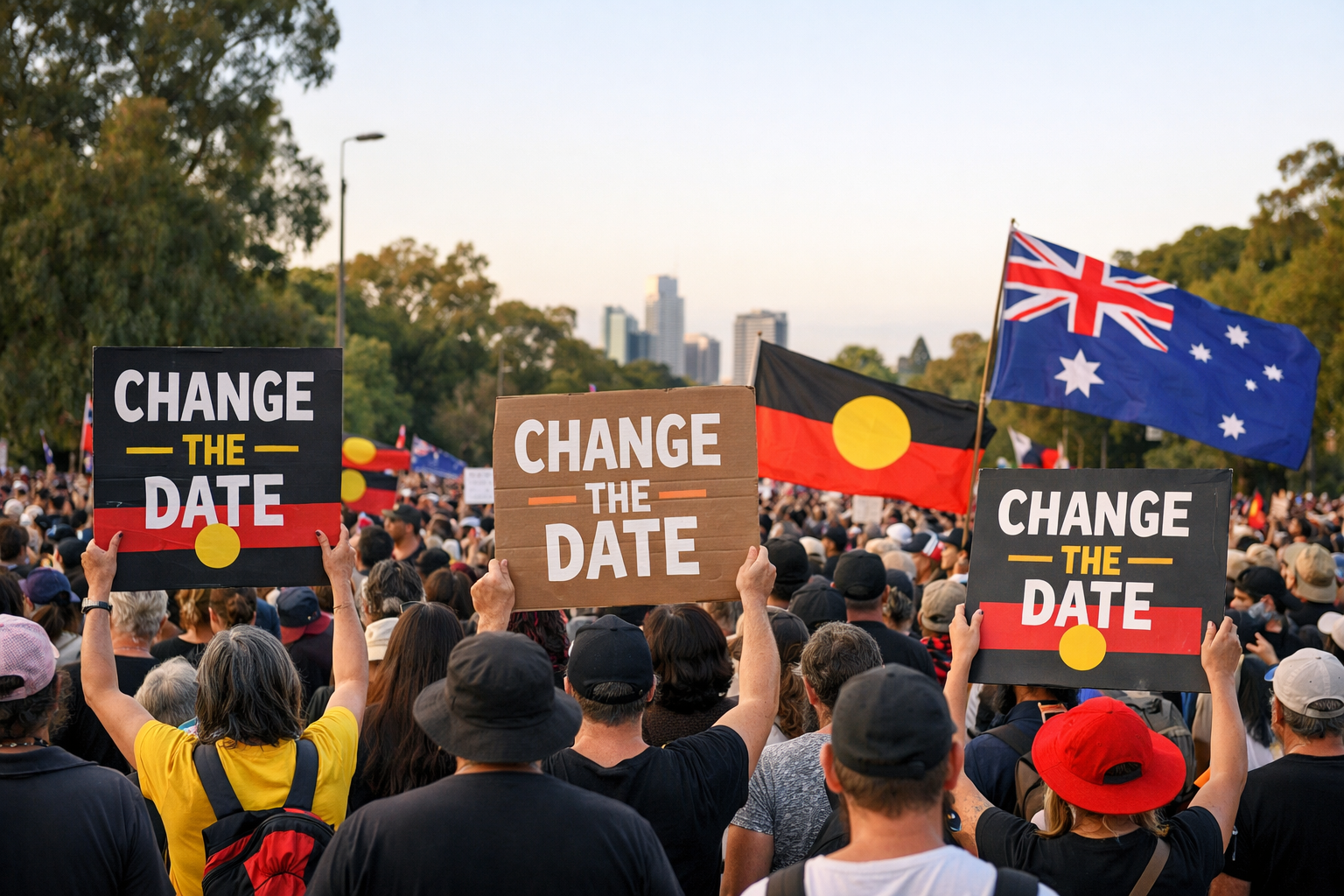
“January 26 change the date rally in Australia” – Image created by ChatGPT with DALL·E by OpenAI.
VOCABULARY LIST
Truth-telling (noun) /ˈtruθ ˌtɛlɪŋ/
The act of honestly sharing real history, especially stories that were ignored or hidden.
Truth-telling is seen as an important step in helping Australians understand First Nations history.Change the date (phrase) /tʃeɪndʒ ðə deɪt/
To move Australia Day from January 26 to another date.
Many people want to change the date to make the national day more inclusive.First Peoples (noun) /ˌfɜst ˈpipəlz/
The original Aboriginal and Torres Strait Islander peoples of Australia.
First Peoples have lived on this land for tens of thousands of years.Not taught (phrase) /nɒt tɔt/
Something that is missing from school education.
Much of Australia’s colonial history was not taught in schools for a long time.Backlash (noun) /ˈbæklæʃ/
A strong negative reaction from people who disagree.
Some organisations faced backlash after supporting a date change.Day of mourning (noun phrase) /deɪ əv ˈmɔnɪŋ/
A day to remember loss, suffering, and injustice.
January 26 has been marked as a day of mourning by First Nations people since 1938.Hurtful (adjective) /ˈhɜtfəl/
Causing emotional pain or sadness.
Many First Nations Australians say January 26 is a hurtful date.Colonial history (noun phrase) /kəˈloʊnɪəl ˈhɪstəri/
The history of European settlement and control over Indigenous land and people.
Learning colonial history helps explain why the date is so painful.Long weekend (noun phrase) /ˌlɒŋ ˈwikˌɛnd/
A weekend with a public holiday added, usually three days long.
Everyone loves a long weekend with time to relax and celebrate.Unifying (adjective) /ˈjunɪfaɪɪŋ/
Bringing people together rather than dividing them.
Many people want a unifying national day that includes everyone.
ARTICLE
The debate about January 26 and Australia Day continues, with many people saying truth-telling and education are key to understanding why the date should change.
Victoria’s former Treaty commissioner says national truth-telling processes can help Australians learn more about the real history of First Peoples and why many want to change the date.
Last year, Victoria’s Yoorrook Justice Commission released its final report. It found that colonisation brought death, violence, disease, dispossession and strict government control to First Peoples across the state. This colonial history was not taught to many Australians at school for a long time.
While some states have stalled their truth-telling plans, there is still a push for a national body. Gunditjmara Elder Jill Gallagher says many Australians have never learned these stories properly, because so much of the history was not taught.
She believes truth-telling can help people hear these stories and understand why January 26 is such a hurtful date. Protests and commemorations have grown over the years, but there has also been strong backlash from conservative commentators and parts of the media.
January 26 marks the arrival of the First Fleet in 1788. While it only became an official public holiday in 1994, First Nations people have marked it as a day of mourning since 1938.
Ms Gallagher says it’s hard to call the date a “tradition” when First Peoples have been mourning it for much longer. She says she doesn’t mind what date Australia chooses, as long as it is unifying.
Laughing, she adds that everyone loves a long weekend, and says it would be great if all Australians could celebrate together in a way that respects First Nations communities.
SOURCE:
This article is based on:
January 26 debate hinges on truth-telling and education
Reflection Questions
Instructions:
Use these questions as:
– Speaking practice (e.g. talk to yourself, record and listen back)
– Writing practice (e.g. short paragraph answers)
– Class discussion with your teacher or classmates
What does January 26 mean to you personally?
Did you learn much about First Peoples’ history at school?
Why do you think truth-telling is important for a country?
How do you feel about changing the date of Australia Day?
What would make a national day feel more unifying to you?
Comprehension activity - multiple choice
If you’re interested in working together, have a look at the different ways we can work together