Everyday Aussie habits and rules that confuse visitors
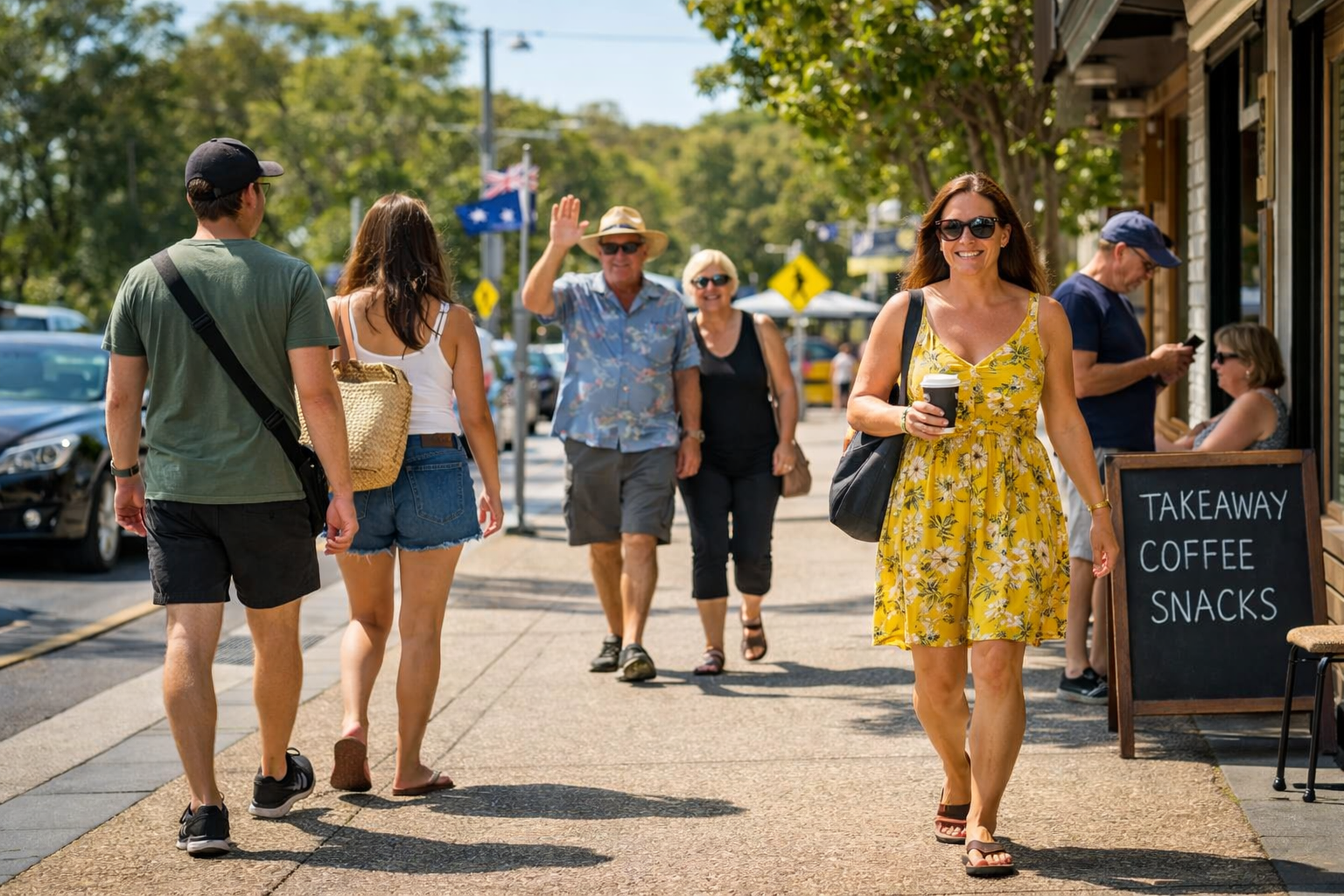
A photograph captures a typical Australian footpath with pedestrians and outdoor café seating – Image created by ChatGPT with DALL·E by OpenAI.
VOCABULARY LIST
Footpath (noun) /ˈfʊt.pæθ/: The sidewalk or path for people walking.
Always walk on the left side of the footpath in Sydney.Crowding (noun) /ˈkraʊ.dɪŋ/: Being too close to other people.
Crowding on the bus can feel rude if you’re not used to it.Merge (verb) /mɜdʒ/: When one car joins another lane.
He let me merge in traffic, so I waved thanks.Give way (phrasal verb) /ɡɪv weɪ/: Let someone else go first in traffic.
Remember to give way when cars enter the roundabout.Redback spider (noun) /ˈred.bæk ˈspaɪ.də/: A dangerous spider native to Australia.
Check for redback spiders before sitting outside.Huntsman spider (noun) /ˈhʌnt.smən ˈspaɪ.də/: A large harmless spider often found inside houses.
I found a huntsman spider in my shoe!Howyagoin? (phrase) /ˌhaʊ.jəˈɡoʊ.ɪn/: Informal way of asking “How are you?”
“Howyagoin?” “Yeah good, mate – and you?”See ya later (phrase) /si jə ˈleɪ.tə/: Casual goodbye, not necessarily a future plan.
I said “see ya later” to my mate at the shops.Wave (verb) /weɪv/: To raise your hand as a greeting or thank-you.
Drivers often wave to strangers in regional towns.Sunrise (noun) /ˈsʌn.raɪz/: The time when the sun comes up.
Many Aussies wake at sunrise to enjoy the outdoors.
ARTICLE
A foreigner recently asked about Aussie culture, and it showed just how many everyday habits and rules can confuse visitors. On Reddit, hundreds of people shared their thoughts under the question: “As an outsider, what everyday Australian habits or rules surprised you the most?”
One of the top answers was about walking on the left side of the footpath. A Sydney local said, “Most importantly, walk on the left side. We're humans, not animals.” Others agreed, saying Australians like more space than visitors. Crowding can feel rude, even if it’s unintentional.
Driving is also full of Aussie habits, especially in rural areas. Drivers often wave to each other, even if they don’t know each other. The further you go from the city, the more common it is. Sometimes it’s just a finger lift off the steering wheel. If someone lets another car merge in traffic or gives way in a car park, a thank-you wave is expected.
Another habit is flashing your headlights to warn other drivers about speed cameras. Some say this still happens in the suburbs of big cities.
Australians also live closely with wildlife. People who grew up here always check outdoor furniture for redback spiders and avoid putting fingers in holes outside. Indoors isn’t always safe either. One person said they found a huntsman spider inside a shoe, so now they check every shoe every time.
Australian language can confuse visitors too. “See ya later” doesn’t always mean you will meet again. The greeting “Howyagoin?” isn’t literal. The usual answer is, “Yeah good, mate – and you?” even if you’re not feeling great. Saying “I’m sorry” can also be confusing; Aussies often use it to show sympathy, not blame.
Lifestyle habits like early mornings surprised new arrivals. Many Aussies wake at sunrise to enjoy the outdoors before it gets hot, especially in cities like Brisbane.
Overall, these habits show a culture shaped by space, wildlife, climate, and an unspoken social code. Visitors may need time to understand it, but Australians generally agree: stay on your side, wave in traffic, check for spiders, and don’t take “see ya later” too literally.
SOURCE:
This article is based on:
Reflection Questions
Instructions:
Use these questions as:
– Speaking practice (e.g. talk to yourself, record and listen back)
– Writing practice (e.g. short paragraph answers)
– Class discussion with your teacher or classmates
Have you ever visited Australia? What surprised you most?
How do you greet people in your country? Is it similar to howyagoin?
Would you feel comfortable walking on the left side of the footpath? Why or why not?
Do you like waking up early like many Australians? Why or why not?
How would you react if you found a spider in your shoe?
Comprehension activity - multiple choice
If you’re interested in working together, have a look at the different ways we can work together