The Aussie T-Flap
The Aussie T-Flap: Why “Water” Sounds Like “Waw-Duh”
Have you ever noticed how Aussies say “water” like “waw-duh”, not “waw-tuh”?
That soft D sound you're hearing is called the T-Flap, and it's one of the most important (and confusing) features of natural-sounding Australian English pronunciation.
In this video lesson, I break down:
What the T-flap is (and how it works in your mouth)
Why we use it in Aussie speech (hint: it's not just laziness)
When it occurs (between vowel sounds + syllabic L’s)
How to practise it, with sentence drills and listening tips
This sound also shows up between words — not just inside them. That’s called linking, and when combined with the T-flap, it’s a game changer for sounding fluent.
Watch the full lesson above and download the FREE T-Flap PDF Cheat Sheet.
Want to go even deeper with your natural Aussie pronunciation?
Check out my lesson on the Schwa Sound — it’s often paired with the T-Flap and plays a HUGE role in sounding more relaxed and fluent.
For bite-sized Aussie insights, follow me on Instagram: @aussie.english.with.amanda
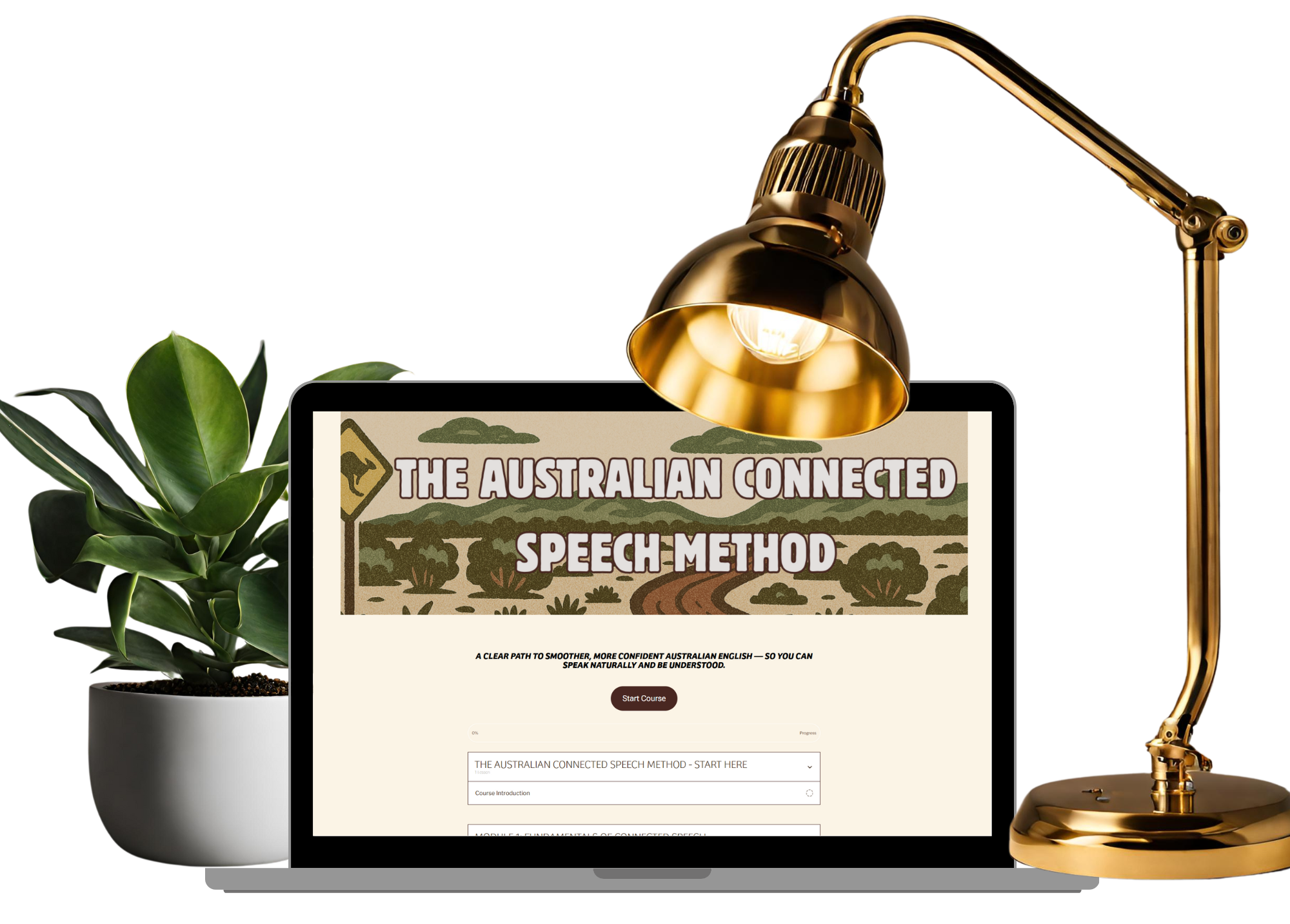
Want to speak Aussie English more naturally?
If this video lit a fire under your pronunciation journey, you’re going to love my most popular course:
✨ The Australian Connected Speech Method ✨
This self-paced online course helps you master:
Intrusive sounds (Y, W, R)
Linking, reductions, dropped sounds
Rhythm, intonation, natural stress patterns
And the real flow of fast Aussie speech
Includes: Audio drills, breakdowns, mini stories, practice sheets & more — all designed for busy professionals, international students, and migrants living in Australia.
It’s the fastest way to stop sounding like a robot and start sounding like you — just with a clearer, more confident Aussie accent.
Check out the full course here → https://www.aussieenglishwithamanda.com/the-australian-connected-speech-method